House Clearance in Feltham

Feltham House Clearance provides a practical, organised house clearance in Feltham for homeowners, landlords, executors and anyone who needs rooms emptied with care. The service is designed to remove household contents in a structured way, whether the work involves a single room, a full property or a property that needs careful sorting before items leave the site. We focus on making the process clear, manageable and tidy from the first enquiry to the final sweep-through.
Our work covers a broad range of domestic clearance needs, including furniture, general household items, loft contents, garage contents and mixed items that need separating before removal. Some properties contain saleable or reusable pieces, while others hold damaged, outdated or awkwardly stored belongings that require a straightforward removal plan. We aim to keep the service simple to understand and suitable for customers who want the house cleared without unnecessary disruption.
If you need a quote, start by looking at the type of property and the amount of contents involved, then send the details through our contact page when you are ready.
Domestic clearance for full homes and partial clear-outs
 A house clearance can mean very different things from one property to another, so we tailor the work to the amount and type of contents present. Some customers need a full clear-out after a move, renovation or family change, while others only need selected rooms emptied. We handle the clearance in a methodical order, separating bulky furniture, smaller household items and anything that needs special attention before removal. This helps keep the work controlled rather than rushed.
Where items are mixed across rooms, we can work from a prepared list or walk through the property section by section so nothing is overlooked. That approach is especially useful when there are wardrobes, drawers, cupboards or boxed items to sort rather than simply remove. It also makes it easier to distinguish between items to keep, donate, recycle or dispose of. For a straightforward comparison of service options, you can review house clearance alongside the wider domestic services available on the site.
In many clearances, access and layout matter as much as volume. Narrow staircases, loft hatches, basement spaces or packed rooms can all affect how the work is planned. We keep the emphasis on safe removal, steady progress and leaving the cleared areas tidy once the items are out. If you already know that the job is limited to furniture or general household pieces, it may also be worth checking furniture clearance for a more focused description of that type of work.
Sorting, separation and responsible removal
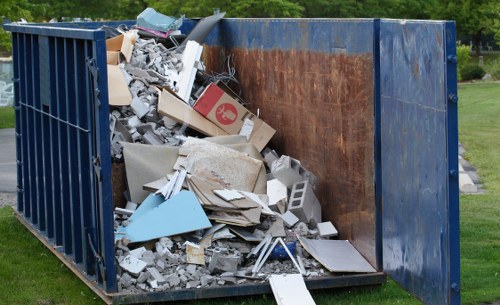
Not every house clearance is only about lifting items away. Often the useful part of the job is the sorting that happens before removal, because it determines what can be reused, what should be recycled and what needs disposal. We can work through mixed contents in a way that keeps the process orderly, especially when a property contains a combination of furniture, boxed items, ornaments, soft furnishings and general household goods. That care can reduce unnecessary handling and make the clearance feel more manageable.
When a property contains items in storage spaces, lofts or garages, the contents are frequently a mixture of seasonal pieces, old paperwork, broken household goods and items that have simply been left in place for years. These spaces often need more patience than a regular room because the contents are less uniform and the access can be less convenient. For these areas, the clearance plan benefits from a clear starting point and a sensible order of work. If you need help with storage areas in particular, loft clearance and garage clearance describe two common parts of this kind of project.
Useful preparation is usually limited to practical details rather than heavy lifting. A short written description of the rooms involved, the kinds of items present and any access issues is often enough to begin. Where items need to stay or be identified before removal, marking them clearly can help the process move more smoothly. For larger household jobs, this basic information supports a more accurate quotation and reduces the risk of overlooking anything important when the clearance day arrives.
Furniture, household contents and reusable items
House clearances often include large pieces that need care because of their size, weight or shape. Sofas, tables, wardrobes, bed frames and cabinets can all require a planned route through the property, especially where hallways are narrow or upper floors are involved. We handle these items as part of the wider domestic clearance rather than treating them as isolated problems. Where useful, the service can also be narrowed down to specific item groups so the work matches the property’s actual needs.
Some households contain items that are no longer needed but are still in usable condition. In those situations, the clearance can be organised to separate what may be suitable for a second life from what should move directly to disposal or recycling. That distinction is especially helpful when the property includes mixed-quality contents after years of use. If your main concern is the removal of furniture rather than a full property, furniture disposal and the related clearance pages give a clearer sense of the options available.
We also understand that household clearances can involve items with different practical values, from everyday furniture to objects that are simply taking up space. The aim is not to overcomplicate the job but to manage each group sensibly. A good clearance plan reduces the time spent handling items more than once and keeps the work focused on what needs to leave the property. That approach is useful whether the clearance follows a sale, a tenancy change or a general declutter.
Preparing a quotation and booking the work

Clear quotations usually depend on the amount of contents, the type of items involved and the ease of access. A property with mixed small items, furniture and packed storage spaces takes a different amount of time from one with only a few bulky pieces. That is why accurate descriptions are so useful. If you can explain which rooms are affected and whether there are stairs, loft access or garden items involved, the quote can be aligned more closely with the actual task.
When preparing for an estimate, it helps to give one concise description rather than many separate messages. A room-by-room summary, a brief list of the main items and any access notes is usually enough. If you are comparing domestic services, the site’s pricing and quotes page may help you understand how a structured enquiry is handled. For full property jobs, the next step is simply to decide what stays, what goes and whether any special handling is needed.
Two points make a quotation easier to prepare: first, be clear about the scope; second, mention anything that could affect the removal route. Those details are often more useful than long explanations. If you are ready to talk through the job, contact us for a quotation and we can take it from there.
Clearance work for different property situations

House clearance work can arise in many domestic situations, and the best approach depends on what the property contains and how much needs to be removed. Some jobs are closely tied to a move, others follow long-term storage, and some are about bringing an occupied property back into order. We keep the focus on the contents themselves, using a practical removal plan that suits the condition and layout of the home rather than forcing a one-size-fits-all method.
It is often useful to think of a house clearance in terms of scope: partial room clearances, whole-home clear-outs, single-category furniture removal or mixed contents removal. Each version places different demands on sorting and lifting, and each benefits from a clear starting point. If the job is mainly about larger domestic items, the relevant pages for house clearance and furniture clearance help show how the service can be matched to the property.
Where a property has items spread across storage spaces, reception rooms and bedrooms, the work is often best handled in stages. That allows the removal to stay organised and reduces the chance of unnecessary disturbance. If you need to request a price, keep the description practical, list the main rooms involved and mention any bulky items that may need particular care. A clear brief makes the process easier for everyone involved.
About Feltham
Feltham is a district in the London Borough of Hounslow in west London, historically associated with Middlesex and now shaped by a mix of suburban streets, transport links and open spaces. The area sits near the boundary with Surrey and has long been influenced by its position between Heathrow, central London and the River Thames corridor. Feltham’s character is partly defined by its town centre and partly by its surrounding residential neighbourhoods, which include post-war estates, older terraced streets and pockets of newer development. The place has a history that reaches back before modern suburban expansion, and its name appears in records long before the present-day borough structure was created. The landscape around the district is relatively flat, with the wider west London setting giving it a more open feel than many inner-city locations. Local green spaces help shape that impression, including Feltham Green and several parks and playing fields that provide recreational space within a built-up environment. Rail connections have also played an important role in the district’s development, linking it to nearby centres and supporting the growth of housing and commerce over time. Nearby landmarks and institutions add to the local identity, while the town centre provides everyday services and a familiar high-street pattern. Feltham’s built environment reflects different periods of change: older parish roots, 20th-century residential growth and later redevelopment in parts of the centre. The result is a place that combines ordinary suburban functions with a long-established local history and a steady sense of community life.
Household items, access and the practical side of removal
Domestic clearance work is usually smoother when the practical details are understood in advance. That includes how items are distributed through the home, which floor they are on and whether any particularly awkward pieces need to be moved first. We can plan around tight hallways, stairs, loft hatches and similar features, but those details are worth mentioning early because they influence how the work is arranged and the amount of time it is likely to take. Clear information leads to a more reliable plan.
Some clearances involve items that are straightforward to move, while others involve a mix of lightweight objects, heavy furniture and contents that have been stored for a long time. When a room has not been used regularly, sorting can take longer than the removal itself because the contents may be layered or boxed in. In those cases, it helps to separate obvious keep items from the rest before the team arrives. For garden-adjacent or outdoor storage, the related garden clearance page can be a useful companion to the main domestic service.
If the property contains more than just standard household contents, the clearance can still be kept orderly by grouping items by area and type. That approach is particularly helpful when you want to avoid unnecessary handling of objects that should remain on site. A concise description of what is to be removed, what is to stay and how the rooms connect is often enough to shape the work effectively. It also makes the job easier to quote and schedule sensibly.
Additional domestic and business clearance options
Although house clearance is the main focus here, some customers also need related services for other parts of a property or for separate premises. For example, a home may need general waste removed alongside household contents, or a small business may have office items that require clearing after a change in use. The important point is to match the service to the setting rather than forcing domestic clearance to cover every situation in the same way. That keeps the work accurate and commercially sensible.
Where the clearance is not purely residential, the site also lists office clearance, business waste removal and waste removal. These pages can help customers distinguish between different types of removal work, especially when the job includes furniture, mixed waste or items from a working environment. If you are unsure which route fits the property, it is usually better to describe the contents and the setting first, then choose the most appropriate service from there.
Recycling, disposal and careful handling
Responsible removal is an important part of any house clearance because domestic contents do not all move through the same route. Some items may be suitable for reuse, while others are better directed towards recycling or disposal. We approach the work with that distinction in mind so that the clearance is organised rather than indiscriminate. Where items are broken, outdated or no longer wanted, they still need to be handled in a way that respects the property and the practical constraints of removal.
Customers often want the work to feel tidy as well as efficient, especially when a property is being handed over, cleaned or prepared for the next stage. That means emptying the relevant spaces, dealing with bulky items sensibly and leaving the cleared areas in a reasonable state. For customers interested in how that process is approached more broadly, the recycling and sustainability page provides a useful outline of the wider approach across the site.
In practice, good clearance work depends on taking the contents seriously as a mixture of objects, not simply as waste. That means understanding what is present, sorting it into sensible categories and removing it with as little confusion as possible. A steady, well-planned process is usually better than a hurried one, because it reduces mistakes and makes the property easier to use again once the clearance is complete.
Getting the property ready for a house clearance
Before the team arrives, a few small steps can make the clearance more straightforward. If there are items that must stay in the property, it helps to set them apart or make them obvious. Any notes about access, parking or specific room order are also useful because they reduce uncertainty on the day. These are practical steps rather than heavy preparation, and they are usually enough to support an efficient start to the work.
For some properties, especially those with multiple rooms or storage areas, it helps to identify the main priority first. That might be the loft, a garage, a set of bedrooms or the whole house. Once the priority is clear, the rest of the contents can be planned around it. If the job includes a mix of furniture and general contents, the main home clearance service page can help frame the request before a quotation is arranged.
Two short reminders are usually enough: keep what you need clearly separate, and mention any awkward access in advance. Beyond that, there is no need to overprepare. A clear description of the property and the items involved is often the most helpful thing you can provide. From there, the service can be matched to the work without unnecessary complication.